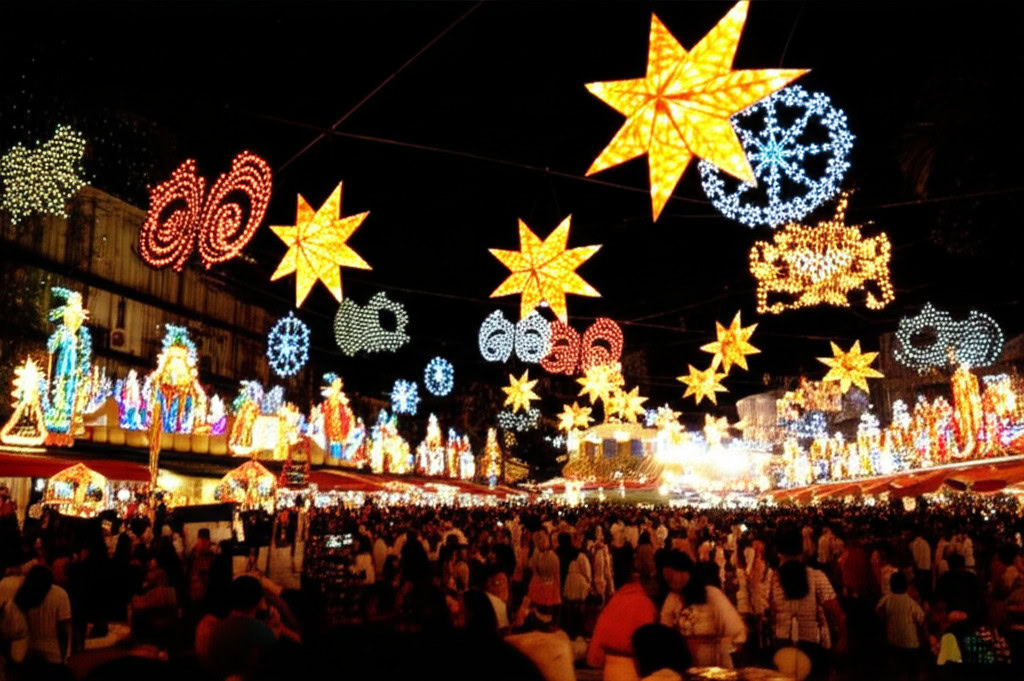
‘Ber-y Merry! Unwrapping the Philippines’ Epic 4-Month Christmas Party!

It’s Beginning to Look a Lot Like… September!
Ever wish Christmas lasted longer? In the Philippines, it’s not a wish, it’s a way of life! We’re talking the world’s longest Christmas season, kicking off when your pumpkin spice latte is just hitting the menu – September.
What’s the deal with this vibrant, faith-filled, and utterly unique holiday marathon? It’s a fascinating blend of the sacred and the secular, the ancient and the modern, a cultural tapestry woven over centuries.
Get ready to be amazed as we dive into the “why” and “how” of this joyful, extended celebration, from ancient whispers to modern-day sparkle. Prepare to have your understanding of Christmas redefined.
Why So Early? The “Ber Months” and Beyond!
The “Ber Months” (Sept, Oct, Nov, Dec): they sound innocuous enough, but in the Philippines, they signal a cultural shift. Why do Filipinos start jamming to carols when others are still sweating in the late summer heat? It’s a question that often perplexes outsiders, a seemingly premature burst of festive cheer.
It’s more than just commercialism, though that’s undeniably part of the equation. The extended season also serves as a “psychological prep,” a gradual immersion into the spirit of Christmas. One could argue that this extended period offers a 100-day countdown to get everyone ready, easing those holiday jitters and spreading the financial burden of gift-giving and feasting.
Could there be echoes of something more ancient at play? Consider the Amihan, the northeast monsoon wind, signaling the harvest season. Long before Christianity arrived, this time of year represented rebirth and abundance. It’s possible that this natural cycle of celebration has become intertwined with the religious significance of Christmas, subtly influencing the Filipino psyche. It’s in the blood, one might say, this innate inclination towards communal joy as the year winds down.
It’s a marathon mentality, not a sprint. The extended period allows families time for saving, meticulous planning, and building anticipation for a truly grand family affair. It’s a testament to the importance placed on familial bonds and shared experiences.
A Journey Through Time: Spanish Bells, American Bows, and Filipino Soul
The Philippine Christmas narrative is a rich historical journey, layered with influences from various eras. Let’s rewind and explore the key moments that shaped this unique tradition.
The Spanish Spark (1500s onwards):
The First Noel in the Tropics arrived with Magellan and the first documented Christmas mass in Cebu (1565). The Spanish colonial period left an indelible mark, introducing Christianity and laying the foundations for many enduring traditions.
Pasko (from “Pascua de Navidad”) became the very heart of the nation. A foreign concept, embraced with local fervor.
Simbang Gabi (The Dawn Patrol!) arose out of necessity, a stroke of genius by Spanish missionaries to accommodate the schedules of local farmers. Nine pre-dawn masses, a testament to faith and devotion (and the promise of granted wishes!). Don’t forget the bibingka and puto bumbong after each mass!
Belen & Parol: The Original Decor Duo. How nativity scenes (Belen) and the iconic star lanterns (Parol, from Spanish “farol”) became staple symbols, guiding lights and works of art adorning homes and streets. These aren’t just decorations, they are visual representations of faith and hope.
Noche Buena: The Midnight Feast Why Christmas Eve is the big night for a lavish family spread (hello, lechon and queso de bola!). A culinary spectacle marking the culmination of anticipation.
Caroling & Aguinaldo: The community serenade and the joyful tradition of receiving gifts/money from godparents and elders. This exchange strengthens bonds of kinship and community.
Even within this period, there were subtle tensions. A lesser-known fact: in the 17th century, Simbang Gabi was briefly halted because locals were singing hymns in their native languages! This small detail reveals the power dynamics at play and the early resistance to cultural imposition.
The American Era (Late 1800s onwards):
Enter Santa and the Christmas Tree! How new traditions blended with the existing ones (Jose Rizal gets a nod for the tree!).
Consumer Culture Kicks In: Christmas cards, department store window displays, and English carols start to appear. The seeds of commercialization were sown, transforming the holiday landscape.
Christmas Today: Blended, Booming, and Beyond!
Despite centuries of foreign influence, the heart of the Philippine Christmas remains distinctly Filipino. The core values of faith, family unity, and community spirit are stronger than ever.
Traditions Alive and Kicking:
Simbang Gabi, Noche Buena, Belen, and Parols are still central, though modern parols might twinkle with a thousand LEDs! The essence remains, even as the aesthetics evolve.
Modern Twists & Adaptations:
Food Fusion: New dishes join the Noche Buena table (spaghetti, anyone?). Culinary innovation alongside traditional fare.
Entertainment Galore: The Metro Manila Film Festival on Christmas Day. A distinctly modern addition to the holiday entertainment landscape.
The Balikbayan Box: A powerful symbol of love, sacrifice, and connection for Overseas Filipino Workers (OFWs) sending gifts home. This seemingly simple box encapsulates the diaspora experience and the unwavering bond with the homeland.
Ultimately, it’s the “Filipinization” of Christmas that makes it so special. Filipinos have beautifully adapted and made these traditions uniquely their own, creating a vibrant cultural identity.
The Great Debate: Commercialism vs. Culture, and What Lies Ahead
Is it “Too Much, Too Soon?” We must acknowledge the ongoing debate about whether the early start is driven by commercialism at the expense of its deeper cultural roots. How do Filipinos navigate this tension?
It’s a delicate balancing act between embracing modernity and preserving tradition, a constant negotiation between faith, family, and the pressures of a consumer-driven society.
The Filipino Christmas isn’t a static, monolithic entity; it’s a living, breathing celebration that constantly evolves while holding onto its essence.
The season continues to be a powerful force for family reunification, community cohesion, and a national expression of hope and resilience.
What might the future hold for the world’s longest Christmas celebration? More innovation, more blending, but always with that uniquely Filipino heart. One can imagine virtual Simbang Gabi services reaching OFWs across the globe, parols powered by solar energy, and the spirit of Bayanihan (community spirit) extending to address social issues during the holidays.
A Season Like No Other
The Philippine Christmas is a magnificent, multi-month spectacle steeped in history, faith, and an incredible spirit of togetherness. It is a testament to the Filipino capacity for joy, resilience, and unwavering devotion to family and community.
You haven’t truly experienced Christmas until you’ve experienced it the Filipino way – warm, loud, long, and absolutely unforgettable! It’s an invitation to step outside your comfort zone and embrace a cultural phenomenon that defies conventional notions of the holiday season.
What’s your favorite Christmas tradition? Have you experienced a Filipino Christmas? Share in the comments! Let’s spark a conversation about the diverse ways Christmas is celebrated around the world.